
The Rise of FRP Cooling Towers in Indian Industries
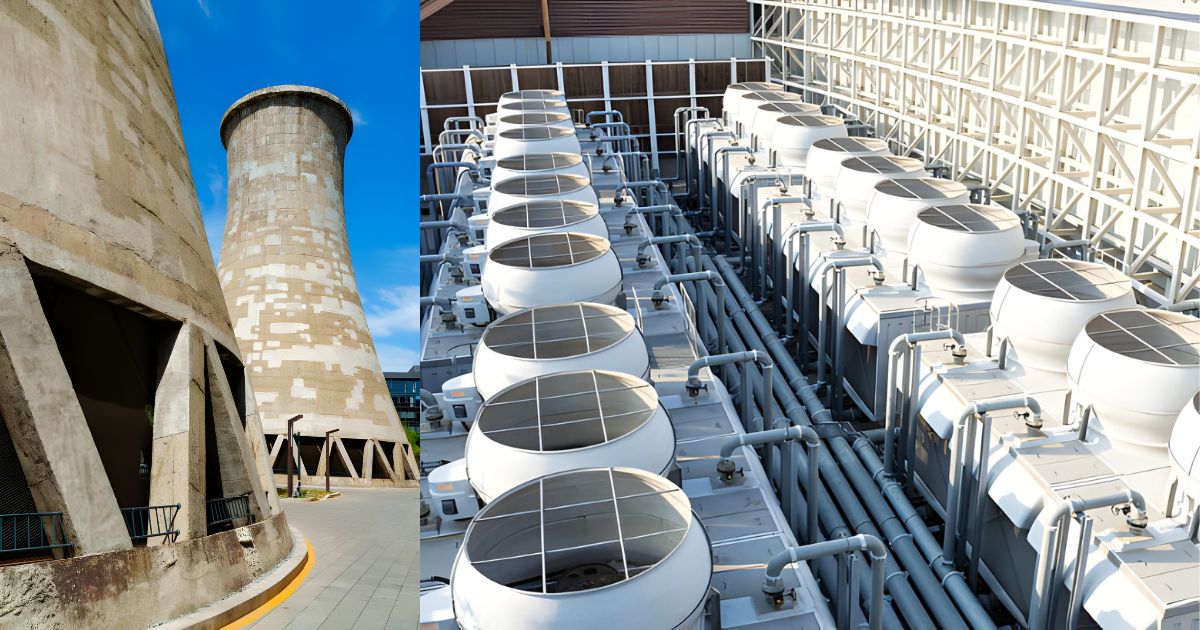
Cooling towers are the backbone of modern industrial cooling systems. For decades, RCC (Reinforced Cement Concrete) cooling towers were widely used in India due to their strength and availability. However, with advancements in materials and design, FRP (Fiber Reinforced Plastic) cooling towers have emerged as the superior choice for industries across sectors.
At Prakash Cooling Towers, we have seen a clear shift among Indian industries towards FRP-based systems. Here’s an in-depth look at why FRP cooling towers are replacing RCC towers and how this shift benefits both performance and sustainability.
Superior Corrosion Resistance
1. Construction and Material Differences
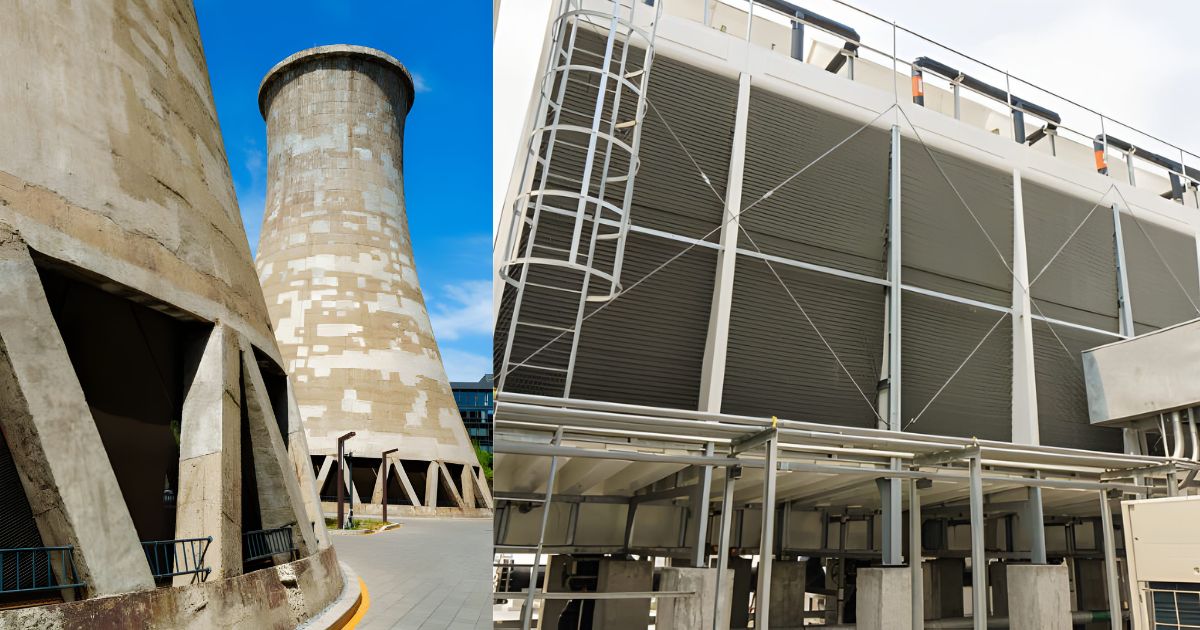
RCC Cooling Towers are built using concrete and steel reinforcements, making them bulky and labor-intensive to construct. In contrast, FRP Cooling Towers are made from lightweight fiber-reinforced plastic — a composite known for its strength, corrosion resistance, and flexibility.
Key Advantage: FRP towers can be prefabricated and installed quickly, reducing construction time from weeks to just a few days.
2. Weight and Installation Time
RCC cooling towers are heavy and require a solid foundation, cranes, and longer installation time. FRP cooling towers, being lightweight, are easy to transport, assemble, and install — even in compact industrial setups.
Result: Industries save both time and labor costs during setup and maintenance.
3. Durability and Corrosion Resistance
One of the major drawbacks of RCC towers is their vulnerability to cracks, corrosion, and leakage caused by continuous water exposure and temperature variation, leading to structural damage over time.
FRP cooling towers, however, are designed to resist:
- Corrosion
- Chemical attack
- Moisture damage
- UV degradation
Outcome: FRP towers deliver a longer service life (15–20 years) with minimal repairs.
4. Maintenance Requirements
RCC towers need regular inspection, sealing, and waterproofing to prevent cracks and leaks. Their heavy structure also makes maintenance more complicated. FRP cooling towers require very little maintenance — a simple cleaning schedule and routine check of fans and motors are sufficient.
Result: Lower maintenance cost and minimal downtime.
5. Cooling Efficiency and Performance
FRP cooling towers are engineered for higher thermal efficiency.
Their aerodynamic shape, advanced fill media, and optimized air–water contact area improve heat exchange and cooling capacity. In contrast, RCC cooling towers often suffer from uneven air distribution and scaling, reducing efficiency over time.
Energy Advantage: FRP cooling towers can help industries save up to 20–25% energy annually compared to RCC models.
6. Customization and Design Flexibility
RCC structures are rigid and difficult to modify once built. FRP cooling towers offer excellent design flexibility — they can be customized in shape, size, and airflow type (crossflow, counterflow, or induced draft) as per industry requirements.
This makes FRP models ideal for:
- Power plants
- HVAC systems
- Chemical industries
- Food and beverage manufacturing
7. Cost-Effectiveness
While RCC towers may seem cheaper initially, their long-term maintenance, repair, and energy costs make them more expensive to operate.
FRP cooling towers, though slightly higher in upfront cost, offer better ROI through:
- Lower energy bills
- Reduced maintenance
- Longer operational life
Conclusion: FRP cooling towers are more cost-effective over their lifespan.
8. Environmental Benefits
FRP cooling towers are eco-friendly due to their:
- Water-saving drift eliminators
- Energy-efficient design
- Recyclable FRP material
- Minimal chemical treatment requirement
They support India’s growing shift towards sustainable and green manufacturing practices.
FRP vs RCC Cooling Tower – Quick Comparison Table
| Feature | FRP Cooling Tower | RCC Cooling Tower |
|---|---|---|
| Material | Fiber Reinforced Plastic | Reinforced Concrete |
| Weight | Lightweight | Heavy |
| Installation Time | Quick (prefabricated) | Slow (on-site construction) |
| Corrosion Resistance | Excellent | Poor |
| Maintenance | Low | High |
| Cooling Efficiency | High | Moderate |
| Life Span | 15–20 years | 8–10 years |
| Cost Effectiveness | High | Low |
| Customization | Easy | Difficult |
Why Indian Industries Are Making the Switch
Indian industries are under increasing pressure to reduce energy consumption, maintenance costs, and environmental impact. FRP cooling towers check all three boxes — making them the future-ready choice for modern operations.
At Prakash Cooling Towers, we’ve helped hundreds of clients upgrade from RCC to FRP systems — improving their efficiency, reducing operating costs, and ensuring long-term reliability.
Frequently Asked Questions (FAQ)
1. What is the main difference between FRP and RCC cooling towers?
FRP towers are lightweight, corrosion-resistant, and energy-efficient, while RCC towers are heavy, prone to cracking, and require more maintenance.
2. Why are Indian industries switching to FRP cooling towers?
Because FRP towers offer longer life, lower operating costs, faster installation, and better energy efficiency.
3. Are FRP cooling towers more durable than RCC towers?
Yes. FRP towers can last 15–20 years with minimal maintenance, whereas RCC towers often require major repairs within 8–10 years.
4. Is the cost of FRP cooling towers higher than RCC towers?
The initial cost may be slightly higher, but overall operational and maintenance savings make FRP towers more cost-effective in the long run.
5. Are FRP cooling towers suitable for all industries?
Yes. FRP towers are ideal for power, HVAC, steel, cement, chemical, and food processing industries.
6. Can old RCC towers be replaced with FRP models?
Absolutely. Prakash Cooling Towers provides replacement and retrofitting solutions for upgrading old RCC towers to modern FRP ones.
7. Do FRP cooling towers save energy?
Yes. Their aerodynamic design and efficient air–water contact reduce energy consumption by 20–25%.
Choose Prakash Cooling Towers for Reliable FRP Solutions
With years of experience and technical expertise, Prakash Cooling Towers is one of India’s leading FRP cooling tower manufacturers.
We design, manufacture, and install crossflow, counterflow, and induced draft cooling towers tailored to your industrial requirements.
Contact us today to upgrade from RCC to FRP and experience superior cooling efficiency and savings.